How to Teach Preschoolers to Count: A Step-by-Step Guide
By Alyssa King · Published
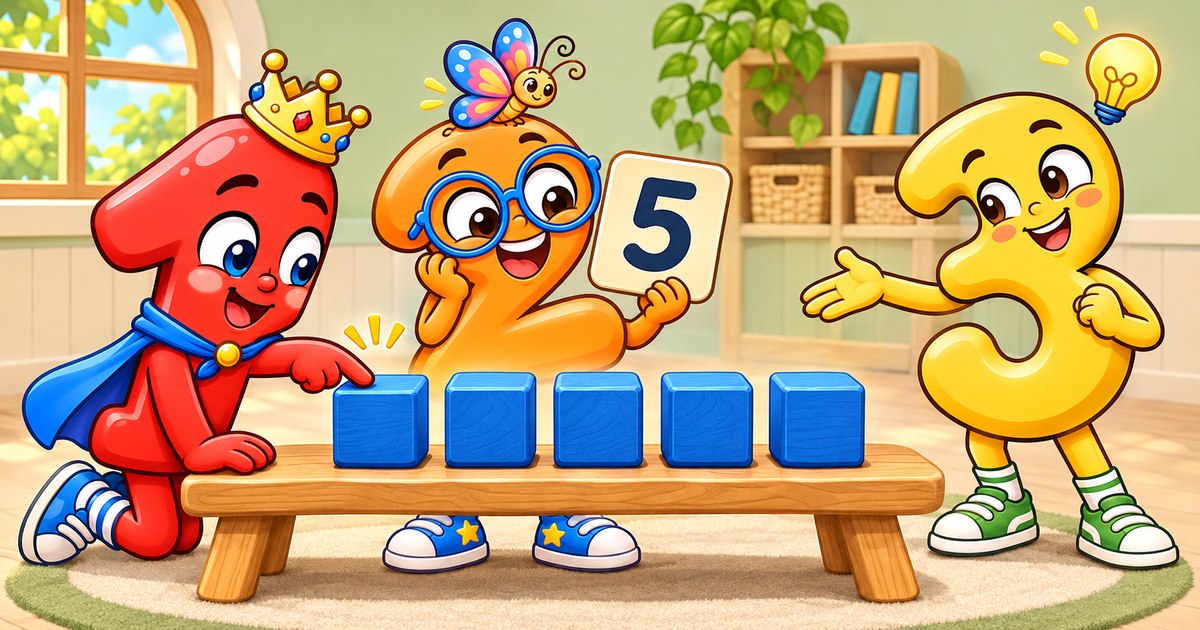
To teach a preschooler to count, start with a small group of real objects, touch each object once as you count, and finish by saying the total. Learning number words, matching one word to each object, and understanding how many are in the group are connected skills that develop over time. The Head Start preschool framework describes this progression.[1]
The U.S. Department of Education’s Teaching Math to Young Children guide recommends building number and operations skills progressively. Its examples connect counting words with objects and written numerals.[2] Here are six practical steps and playful counting games for ages 3–6.
Key takeaways
- Start with real objects: small groups make it easier to keep track.
- Match one number word to each object. Touch or move each item once.
- Say the total after counting. The last number tells how many.
- Build from what your child can do. Add more objects as counting becomes comfortable.
What your child needs to learn about counting
Counting looks simple to adults because we have done it for years. For a preschooler, it includes several separate ideas:
- The number words go in a set order. One, two, three always comes in the same sequence.
- Each object gets exactly one number. This is called one-to-one correspondence.
- The last number tells how many. This is called cardinality. If you end on four, there are four in the group.[1]
- Almost anything can be counted. Blocks, claps, jumps, and even a mix of different toys.
- The order of the objects doesn't change the total. Start from either end of the row, and you still have the same amount.
Together, these ideas are a major part of number sense. Our parent's guide to number sense for preschoolers shows how counting fits with the other building blocks of early math.
How to teach preschoolers to count in 6 steps
Step 1: Make counting part of your day
Say numbers out loud during ordinary routines. Count stairs, shoes by the door, or pumpkins at the store. Sing counting songs and read counting books. The more your child hears the number sequence, the more familiar it becomes.
Step 2: Start with small groups
Begin with one to three objects, then build up to five. Small groups give your child a chance to succeed and make it easier to notice how each number looks and feels.
Step 3: Touch and move each object
Counting with your hands helps with one-to-one correspondence. Have your child touch each object once as they say its number. Moving each object into a “counted” pile makes it even easier to keep track.
Step 4: Ask “How many?”
After counting together, repeat the final number and ask, “So how many are there?” This small question helps your child connect counting with quantity:
“One, two, three, four. How many cars do we have? Four cars!”
Step 5: Count the same amount in new ways
Rearrange the group and count again. Try a line, a circle, or a messy pile. Then count from the other end. Ask, “Did the number change? Why not?” This helps your child discover that moving objects doesn't change the amount.
Step 6: Connect amounts to numerals
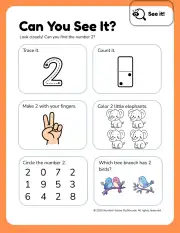
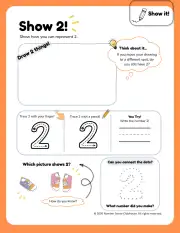
Once your child is comfortable counting objects, connect the amount to the written number. Count three spoons, then write a large 3 next to them. Show three in other ways too, like three fingers, three drawn circles, or three dots.
8 fun counting games for preschoolers
These preschool counting activities take just a few minutes. Choose objects that are safe and age-appropriate for your child, and supervise closely around small items.
1. Count and clean
Pick a basket and count toys as they go in. Clean-up becomes counting practice, and you can finish with, “How many did we put away?”
2. Stair steps
Count each stair as you climb. On the way down, try counting backward from the top.
3. Feed the animal
Draw a mouth on a box and name your hungry animal. Ask your child to feed it exactly four pom-poms or blocks, then count them back out together.
4. Bring me five
Ask your child to bring you a specific number of items, like five spoons. This is harder than counting a group that is already there, because your child has to stop at the right number.
5. Roll and jump
Roll a die and jump, clap, or stomp that many times. Counting actions shows your child that more than objects can be counted.
6. Snack count
Count out crackers or berries before eating. Then count how many are left after each bite.
7. Build a tower
Roll a die and add that many blocks to a tower. Count the whole tower after each turn, and guess how many blocks it can hold before it falls.
8. Fill a ten frame
Draw two rows of five boxes and place one counter in each box as you count. See how to set one up in our guide to ten frames for preschoolers.
Common counting mix-ups and how to help
Mistakes are a normal part of learning to count, and they can show you what your child is working on.
Skipping or mixing up numbers
What it sounds like: “One, two, three, five, eight!”
Try this: Count together slowly, sing counting songs, and practice with a short sequence. Add a new number when the earlier ones feel steady.
Counting an object twice or missing one
What it looks like: Your child's words and fingers don't line up.
Try this: Line up the objects, and move each one aside as it is counted.
Counting again when asked “How many?”
What it sounds like: You ask how many, and your child starts over at one.
Try this: Model the answer: “One, two, three. There are three!” Then ask them to show you the three.
Getting stuck in the teens
What it sounds like: “Eleven, twelve, fifteen, sixteen…”
Try this: The words eleven through fifteen don't follow an obvious pattern, so they take extra practice. Count together during routines and focus on one or two tricky numbers at a time.
Recognizing numbers but not knowing the amount
What it looks like: Your child can name a 6 but brings you four blocks.
Try this: Pair the numeral with objects. Build it, count it, and show it another way.
Questions that build counting skills
- How many do you think there are? Let's count to check.
- How do you know you counted them all?
- What number comes next?
- What if we started counting from the other side?
- Which group has more? How could we find out?
- What would happen if we added one more?
You may also notice your child recognizing small groups without counting at all. That skill has its own name, and our guide What Is Subitizing? has games to practice it.
Tips for keeping counting fun
Keep it short. A few minutes at a time is plenty.
Count alongside your child. Saying the numbers together gives support without turning practice into a test.
Celebrate the effort. Try, “You touched every block as you counted!”
Follow their interests. Count dinosaurs, trucks, or stickers, whatever they love.
Go at your child's pace. Some children move quickly through these ideas, while others need more time with small numbers. Both are completely okay.
Start counting today
Choose one small moment today, like the stairs, snack time, or clean-up, and count it together. Then ask, “How many?”
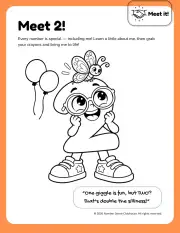
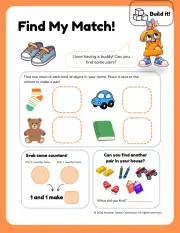
Want ready-to-use activities? The Numbers 1–10 Activity Bundle lets your child explore each number by counting, tracing, drawing, and building. You can also meet the Number Friends with our free number coloring pages for numbers 1–5.
Research and further reading
- Office of Head Start (2015). Math Preschool: Mathematics Development. Head Start Early Learning Outcomes Framework: Ages Birth to Five. Describes preschool developmental progressions in counting, cardinality, and other math skills.
- Frye, D., Baroody, A. J., Burchinal, M., Carver, S. M., Jordan, N. C., & McDowell, J. (2013). Teaching math to young children: A practice guide. Institute of Education Sciences, U.S. Department of Education, NCEE 2014-4005. Recommendation 1 supports teaching number and operations through a developmental progression and is rated moderate evidence.
Common questions
At what age should a child be able to count to 10?
Saying the numbers to 10 and accurately counting 10 objects are different skills. Head Start describes a progression across the preschool years from learning number words to counting objects and understanding the total. Look at what your child can do with real objects rather than using one birthday as a deadline. Ask your child's teacher if you have concerns.
What is the best way to teach a preschooler to count?
Count real objects in everyday moments. Start with small groups, touch each object as you say its number, and finish by asking, “How many are there?” Short, frequent practice with things your child cares about works well.
Why does my child skip numbers when counting?
Skipping numbers is a very common part of learning the counting sequence. Keep counting together out loud through songs, stairs, and daily routines. Counting alongside your child lets them hear the full sequence without feeling corrected.
Why does my child count again when I ask how many?
Your child may not yet connect the last number they said with the total amount. After counting together, repeat the final number and show the whole group: “One, two, three, four. There are four blocks!” Hearing this often helps the idea take hold.
Should I use worksheets to teach counting?
Start with real objects so your child can touch and move what they count. Printable pages can then add variety and give your child a way to show what they know, especially when paired with hands-on play and conversation.
Related guides
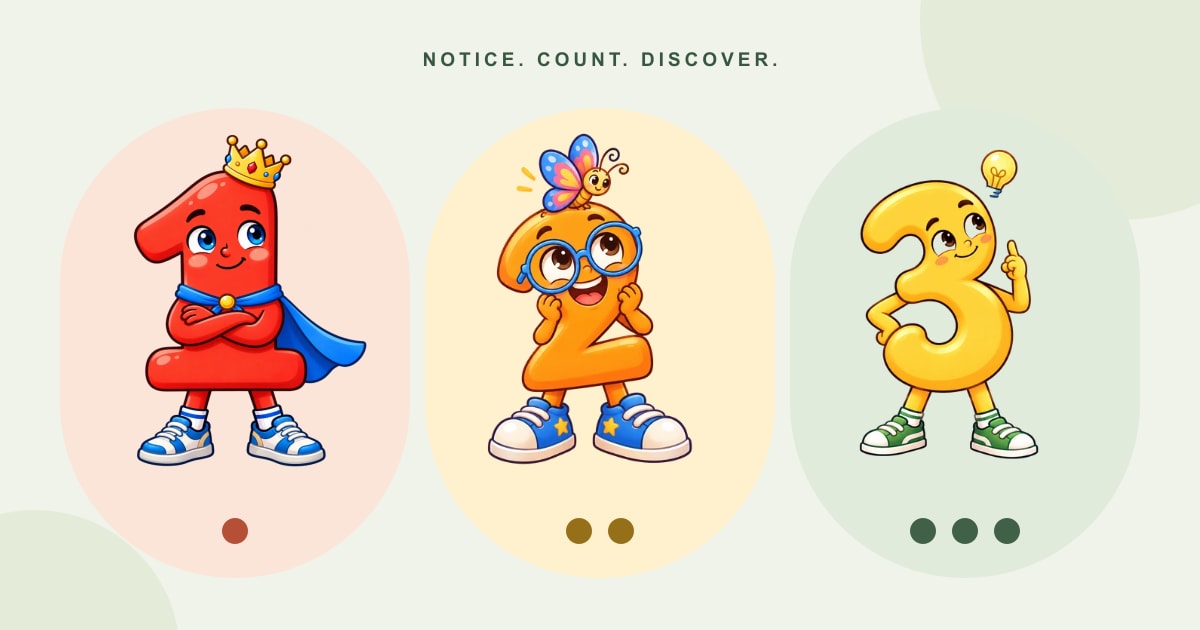
Number Sense for Preschoolers: A Parent's Guide
What number sense means for ages 3–6, the five building blocks to look for, and simple everyday ways to explore numbers with your preschooler at home.
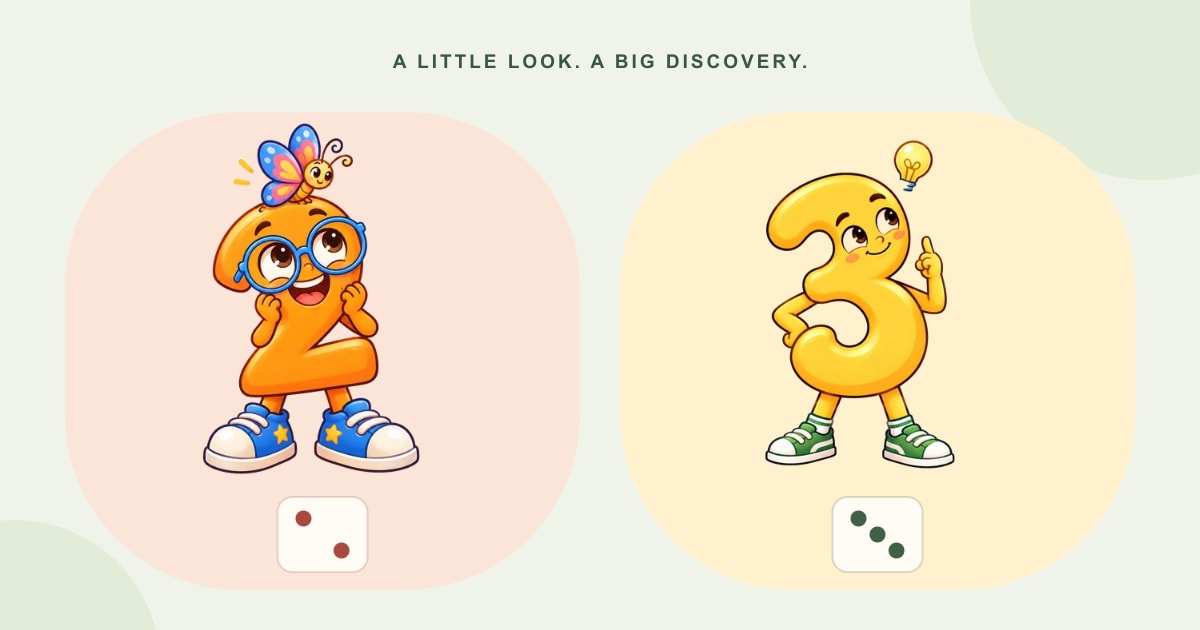
What Is Subitizing? 8 Games for Preschoolers (Ages 3–6)
What subitizing is, why it matters for early math, and 8 easy subitizing games to play with your preschooler using dice, dots, and fingers.
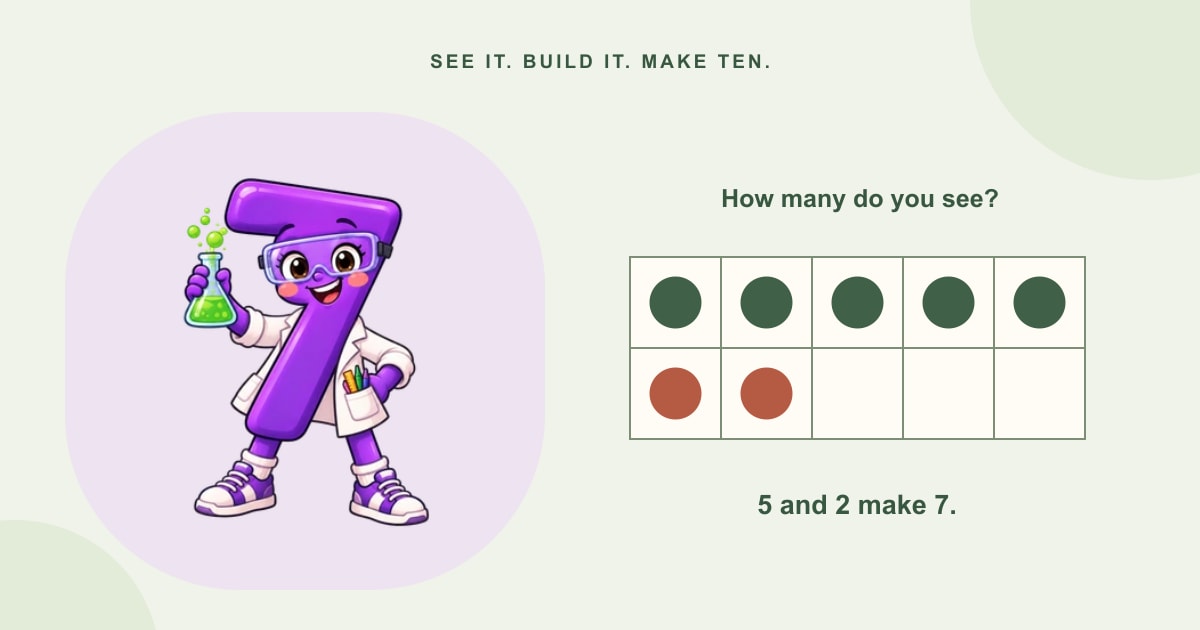
Ten Frames for Preschoolers: How to Use Them at Home
What a ten frame is, why teachers love it, and 8 easy ten frame activities and games to build counting and number sense with your preschooler at home.