How to Teach Number Recognition to Preschoolers
By Alyssa King · Published
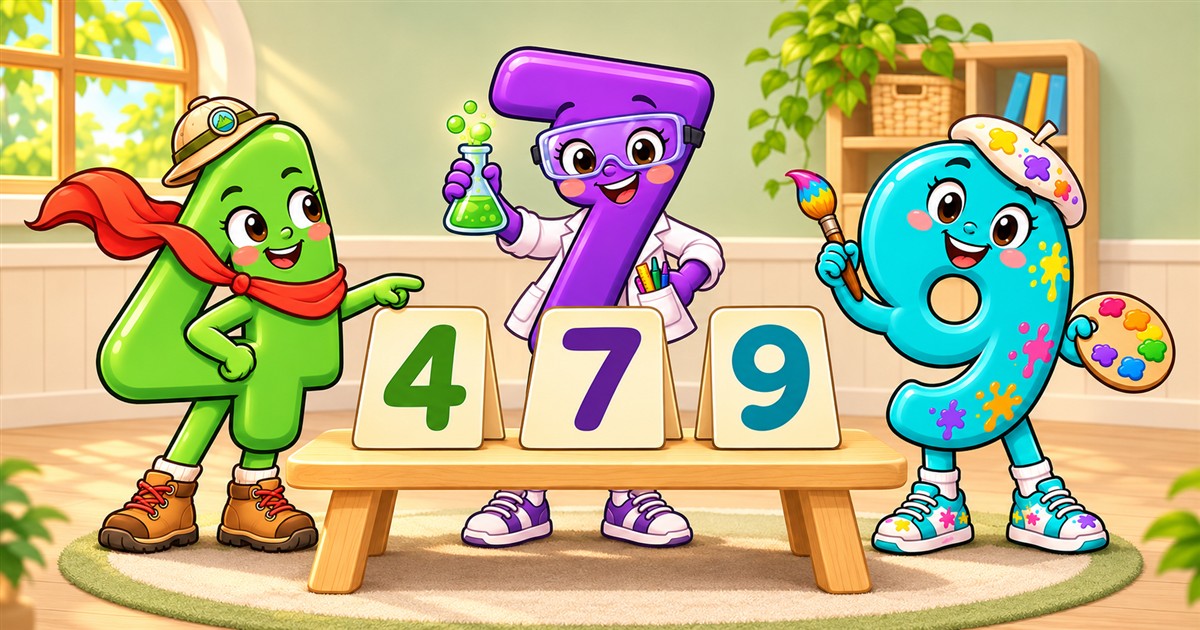
To teach number recognition, start with a few written numbers your child is interested in. Say each number’s name, help your child find or match it, and connect it to a group of objects. Use small games rather than asking your child to identify every number from 0 to 10 at once.
Your child may happily count to ten, then pause when you point to a 4 on a page. Knowing the counting sequence and recognizing a written number are different skills. A few playful encounters with the same number can give you a useful place to begin.
What is number recognition?
In this guide, number recognition means identifying a written numeral and connecting it to its name. A numeral is the written symbol for a number, such as 3. Understanding what that number means goes further: three can describe three blocks, three jumps, or three fingers.
For example, a child might recognize 5 on a card but still need help counting out five toys. Another child might hand you five toys but not yet name the written 5. Notice which part your child is practicing so you can offer the right kind of help.
Stanford’s DREME resources describe number learning as several connected ideas, including number words, written numerals and amounts. Building those connections is more useful than treating a correct name as the whole goal. Read DREME’s Numbers at a Glance.
Which numbers should you start with?
Start with a small selection, such as 1, 2 and 3, rather than laying out the entire set. If your child already knows those, choose a familiar number alongside one they are learning. Their age or a favorite number may give you a natural starting point.
You do not need to follow a fixed “number of the week” schedule. Watch what your child can do comfortably and adjust. If choosing between two cards is enjoyable but choosing between six feels frustrating, use two.
The Institute of Education Sciences recommends connecting written numerals with counted collections. After counting a small group together, write or show the numeral that represents it. Its family guide also encourages building on what children already know. See Teaching Math to Young Children for Families and Caregivers.
Six number recognition activities to try at home
Use large blocks, stuffed animals or other toys your child already plays with safely. Avoid small loose pieces for children who put objects in their mouths. Stay nearby, and let an adult handle cutting out cards.
1. Find a number’s partner
Write two copies each of 1, 2 and 3 on separate cards. Put one set in front of your child and hand them a card from the other set. “Here’s 2. Can you find its partner?” Leave the cards face up so remembering their locations does not become a separate challenge.
Say the number’s name as you match. Once matching feels familiar, ask your child to find 2 without showing its partner. Matching identical shapes and recognizing a number by name give you different information.
2. Give a number its own collection
Place a 3 card beside an empty basket. Ask, “Can we give this number three blocks?” Move each block into the basket as you count it, then say, “Three blocks. This is how we write three.”
Start with an amount your child can manage. If counting gets tangled, model it slowly with fewer objects. The point is to connect the written number with an amount, not to rush to ten.
3. Make a number delivery
Put number cards on two toy houses or large boxes. Pretend you are delivering a letter: “This one goes to house 2. Can you find it?” Let your child give you a delivery next.
This version focuses on recognizing the written number. On another day, turn it into a counting game: house 2 needs two blocks delivered. Keep the two instructions separate at first so the game stays clear.
4. Color a number, then find it somewhere else
Let your child choose a page from our free 0–10 Meet It coloring sheets. Name the number while they color, without turning every moment into a question. Later, write the same number plainly on a card and see whether they can find it.
A character can make a number inviting. Showing the plain numeral too gives your child a chance to recognize it without relying on its color or face. Coloring is one way to spend time with a number; it does not replace exploring how many that number represents.
5. Match a numeral to dots or fingers
Show a small group of drawn dots and offer two numeral cards to choose from. Your child can count the dots or recognize the amount, then find the matching numeral. Try it with fingers as well.
NAEYC describes games that connect written numerals with dot collections and number names. Begin with a few choices, and expand the game when your child is ready. Read NAEYC’s dot-card and finger-game guide.
6. Give zero a job
Place a 0 card beside an empty basket and a 2 card beside a basket holding two large blocks. “This basket has two blocks. This basket has zero blocks.”
Let your child move the blocks out and choose the card for the newly empty basket. Zero has a meaning to explore, even though there is nothing inside to count. Later, you can show 10 with ten objects; its written numeral uses two digits.
What if my child can count but cannot recognize numbers?
Keep the two skills connected without assuming one automatically brings the other. Count a manageable group, say its total, then show the written numeral. If your child counts four blocks, place a 4 beside them.
Our guide to teaching preschoolers to count explains how to help children count each object once and understand that the last number tells how many there are. Use that alongside these recognition games if counting objects is still a work in progress.
What if my child mixes up numbers?
Offer a clear model rather than repeated guessing. If your child calls 6 “nine,” you might say, “This one is six. Here is nine. Let’s look at them together.” Keep both cards upright and point out what is different.
You can return to a smaller set or take a break. Notice whether the task is naming the symbol, matching it or counting an amount. Difficulty with one task does not tell you everything about what your child understands.
Try one game today
Choose two or three cards and one activity your child would enjoy. If they like pretend play, make deliveries. If they want to color, start there and find the same number on a card afterward.
Download the free 0–10 coloring sheets or free number playing cards to get started. You can also write your own cards on scrap paper. The useful part is what you notice and talk about together.
Sources and further reading
- Stanford DREME: Numbers at a Glance.
- Institute of Education Sciences: Teaching Math to Young Children for Families and Caregivers.
- NAEYC: Play Games, Learn Math! Explore Numbers and Counting with Dot Card and Finger Games.
Related guides
How to Teach Preschoolers to Count: A Step-by-Step Guide
How to teach preschoolers to count with meaning: 6 simple steps, playful counting games, and fixes for skipped numbers and other common counting mix-ups.
Number Sense for Preschoolers: A Parent's Guide
What number sense means for ages 3–6, the five building blocks to look for, and simple everyday ways to explore numbers with your preschooler at home.
What Is Subitizing? 8 Games for Preschoolers (Ages 3–6)
What subitizing is, why it matters for early math, and 8 easy subitizing games to play with your preschooler using dice, dots, and fingers.